One of the most persistent problems with hand protection on construction sites is the one-glove-fits-all approach. The same box of general-purpose gloves gets handed to the steel fixer, the electrician, the glazier, and the scaffolder — despite the fact that each of those workers faces a completely different set of hand hazards.
Under EN388:2016, cut resistance in protective gloves is measured on a scale from A (low) to F (maximum). Getting the right level for each trade isn’t just a compliance exercise — it’s the difference between a glove that genuinely protects and one that either fails when it matters or gets discarded because it’s too bulky to work in.
Here’s a breakdown of what each construction trade in Ireland actually needs.
General Labourers and Site Operatives — Level A/B
Workers whose primary tasks involve lifting, carrying, and moving materials without direct exposure to sharp edges can generally work safely in Level A or B gloves. These offer light protection with good dexterity, and because they’re lighter in construction, they’re more comfortable for all-day wear.
The key word here is primary. If a labourer is occasionally tasked with moving sheet metal, handling pipe ends, or clearing demolition debris, they should step up to at least Level C. PPE should reflect the actual tasks performed, not just the job title.
Scaffolders — Level C/D with High Abrasion Rating
Scaffolding is one of the trades where cut resistance matters alongside abrasion resistance. Scaffolders handle steel tubes and couplers repetitively, often at height and in all weather conditions. The abrasion from steel tube grinding against the palm throughout a full shift is as damaging to the glove — and potentially to the hand — as a clean cut.
Look for a glove with an EN388 abrasion rating of 4 (8,000+ cycles) alongside a cut level of C or D. Water resistance is worth considering too given Irish weather conditions. Supertouch’s nitrile-coated and oil-resistant options are a practical choice here — the coating maintains grip even in wet conditions, which is a genuine safety concern when working at height.
Steel Fixers and Rebar Workers — Level D
This is the trade most commonly under-protected on Irish sites. Steel fixers work with rebar continuously — tying, cutting, bending, and positioning steel bar that has sharp cut ends and significant weight. The risk of laceration from rebar ends is high, and it’s a repetitive, routine hazard rather than a one-off incident.
Level D (15–22 N of cut resistance) is the appropriate minimum for steel fixers. The glove also needs to maintain reasonable dexterity — a steel fixer tying bar needs to feel what they’re doing. Options like Supertouch’s Pawa range in the D/C bracket offer nitrile coatings that combine protection with grip and tactile feedback.
On large civil infrastructure projects in Ireland — housing schemes, data centre builds, road and bridge works under the National Development Plan — there can be dozens or hundreds of steel fixers on site. This is a significant bulk glove opportunity for any EHS-conscious main contractor.
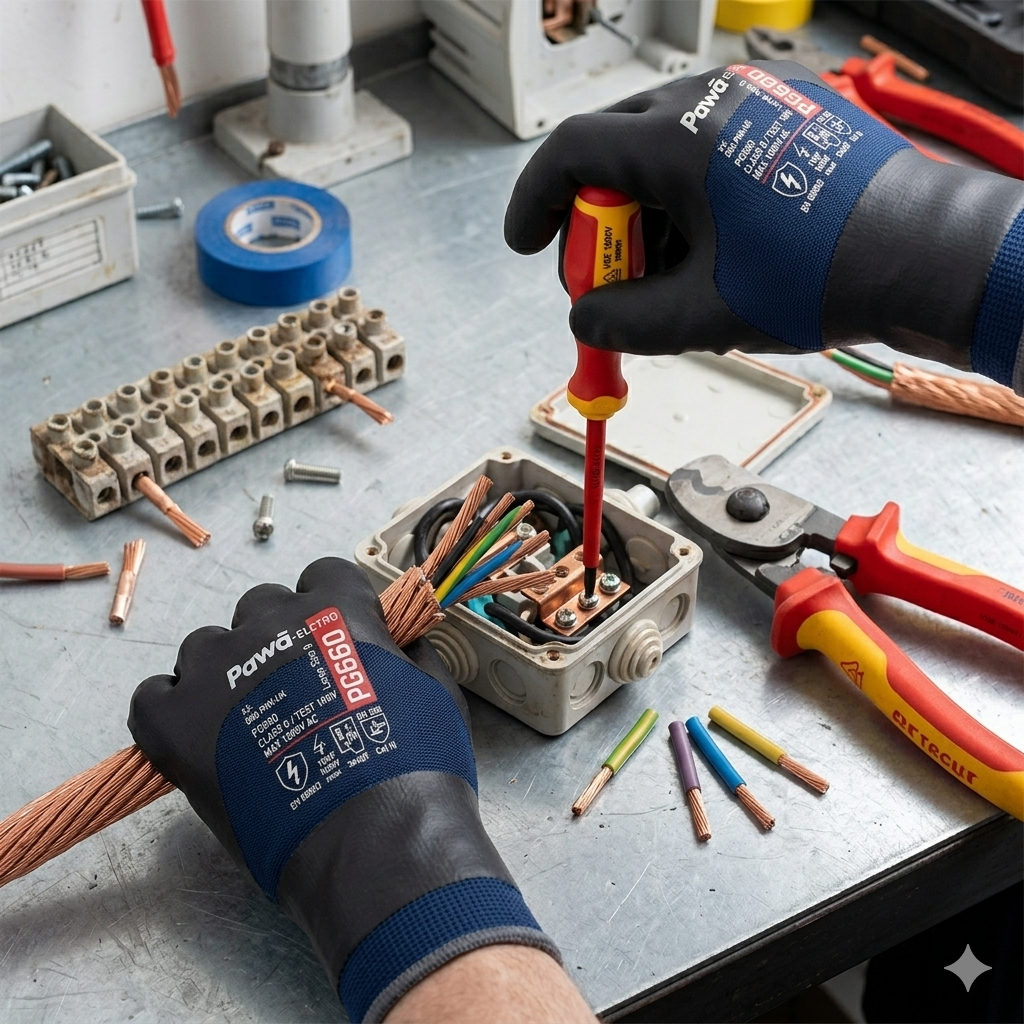
Electricians and M&E Contractors — Level C/D
Electricians face cut hazards primarily from armoured cable, cable tray, and conduit — all of which have sharp edges that can cause lacerations during installation. The requirement is for a glove with sufficient cut resistance while maintaining enough dexterity to handle fittings, terminals, and tools.
M&E contractors — mechanical and electrical — are among the most active trade categories in Irish construction right now, driven by the ongoing pipeline of pharmaceutical and data centre projects across Munster and the wider country. Level C to D gloves with a nitrile or PU palm coating are the standard specification.
Glaziers and Curtain Wall Installers — Level E/F
Glass handling represents the highest cut risk in mainstream construction. Structural glazing, curtain wall installation, and shopfront fitting all involve handling large, heavy glass panels where a slip can result in a serious laceration. Level E or F protection is appropriate here, ideally alongside a glove with heat resistance if the installer is using suction cups or working in direct sun on warm glass.
Supertouch’s Pawa PG520 (Level E, with contact heat resistance up to 250°C) and PG550 (Level F, the highest protection available) are the relevant products for this trade. The grip coating on these gloves is also important — glaziers need secure handling at all times.
Plumbers, Pipefitters and HVAC Engineers — Level B/C
Copper and stainless steel pipe have sharp edges when cut, and HVAC sheet metal ductwork is a cut hazard throughout installation. Level B or C provides appropriate protection for most pipework tasks, with Level D worth considering for stainless steel or large-bore work. Dexterity is important in this trade — plumbers need to feel compression fittings and valve positions.
Roofers — Level C/D with Puncture Protection
Roofers face a combination of cut risk from sheet metal roofing and puncture risk from fixings, nails, and roofing screws. A glove rated Level C or D on cut, with a puncture resistance of 3 or 4, covers both hazards. For metal roofing specifically, the grip coating should perform on wet surfaces — again, a consistent concern on Irish worksites throughout most of the year.
Getting the Right Spec — and Getting It in Bulk
Large construction accounts benefit from having a consistent glove specification mapped to each trade on site. This simplifies the PPE management process, supports EHS auditing, and reduces the waste that comes from workers using the wrong gloves for their task.
Supertouch offer a comprehensive range of EN388-rated gloves across every cut level, with options for oil resistance, water resistance, thermal protection, and impact resistance. At HiVisWorkwear.ie, we supply the full range with bulk and case pricing for construction accounts across Munster and Ireland.
If you manage a large site or multiple sites and want to review your glove specification by trade, get in touch — we’re happy to work through the hazard profile and recommend the right product at the right price point for each role.
View our full range of EN388 cut-resistant gloves at HiVisWorkwear.ie.