

On a busy factory floor, you often need to know who someone is before you’re close enough to read their name badge. Is that person a visitor who shouldn’t be near the machinery, a trained first aider, or the shift supervisor? A colour coded hi vis system answers all of those questions from thirty metres away, and it’s one of the simplest, cheapest safety improvements a large site can make.
This guide walks through how factories use hi vis vest colours to identify roles. It starts with single colour vests for general staff and specific duties, then moves up to the two tone executive vests that mark out supervisors and management. It also covers the one thing people most often get wrong: the difference between a vest that looks distinctive and a vest that’s actually certified to keep someone visible around moving vehicles.
Why colour code hi vis vests at all?
In a small workshop, everyone knows everyone. In a large factory, distribution centre or manufacturing plant with hundreds of people across multiple shifts, plus contractors and visitors coming and going, that breaks down fast. A colour coded vest scheme solves several problems at once:
Instant role recognition
Supervisors, first aiders, fire wardens and forklift operators can be spotted immediately in an emergency or when a decision is needed.
Controlling access
A different colour for visitors and contractors makes it obvious when someone is somewhere they shouldn’t be.
Managing new starters
A dedicated new starter or trainee colour tells everyone nearby to keep an extra eye out and not assume the wearer knows the site’s hazards yet.
Traffic and pedestrian separation
On sites with forklifts and MHE, telling pedestrians, banksmen and drivers apart reduces the risk of collisions.
The key point is that colour becomes a language. Once staff are trained on what each colour means, the whole workforce can read the floor at a glance.
First, the safety standard: EN ISO 20471
Before assigning colours to roles, it’s worth understanding what hi vis legally means. In Ireland and across the EU, high visibility clothing is governed by EN ISO 20471, which rates garments by class based on how much fluorescent background fabric and reflective tape they carry:
The highest level of conspicuity, typically jackets or coveralls with sleeves.
The standard for most hi vis vests, suitable where there is vehicle or traffic risk.
The lowest level, for lower risk environments.
Only fluorescent yellow and orange (and yellow and orange combinations) achieve the higher visibility classes. Colours like royal blue, red, pink and paramedic green are useful for identification, but they generally rate as Class 1 or are not certified as hi vis at all. A blue vest can absolutely mark out your electrical team, but if those electricians work anywhere near moving forklifts or traffic, they still need certified yellow or orange for the visibility itself.
In practice, many factories run yellow or orange as the base safety colour and use other colours strictly for indoor, low vehicle risk identification roles.
Single colour vests and the roles they signal
Single colour vests are the backbone of any colour coding scheme. They’re inexpensive, easy to stock in volume, and each colour can carry a clear meaning. There’s no single legal standard that says blue means X, as each site sets its own scheme. But years of common practice across manufacturing and logistics have produced a widely recognised set of conventions:
| Vest colour | Common factory role | Why it works |
|---|---|---|
| Yellow | General operatives, default site vest | Highest visibility base colour, certified to Class 2. The safe default for anyone on the floor. |
| Orange | Warehouse, yard, goods in, traffic areas | Also Class 2. Often used to separate logistics and yard staff from production. |
| Red | Fire wardens, emergency response | Instantly linked to emergency roles and easy to find during an evacuation. |
| Green / paramedic green | First aiders, medical | Universally read as “help is here”, the go to colour for trained first aid staff. |
| Blue (royal / sky) | Maintenance, engineering, specific departments | Distinct from the yellow and orange safety base, so skilled trades stand out. |
| Purple / pink / raspberry | Visitors, new starters, quality or hygiene | Deliberately unusual colours flag people who need supervision or don’t work the floor daily. |
| White / grey | Cleanroom, quality control, contractors | Sets apart non production staff and auditors. |
This is exactly why a broad colour range is so useful. One consistent vest across the whole workforce, in a colour for every role.

Yoko Hi Vis Vest in Colours
The trusted HVW100 vest in lime, red, royal blue, sky blue, paramedic green, pink, purple, maroon, white and more. Two 5cm reflective tapes and hook and loop front fastening. Class 2 in solid hi vis shades, Class 1 in split and non hi vis colours.
Shop the Yoko vestYou’ll find the full range of plain and coloured options in our Hi Vis Vests category.
Building your own colour code
A colour scheme only works if it’s documented and consistent. A few practical rules:
- Keep it simple. Five or six colours that everyone remembers beats a dozen that no one does.
- Put it on the wall. A printed key at every entrance, in the canteen and in the induction pack means visitors and contractors learn it immediately.
- Reserve a colour for the untrained. A new starter colour for the first few weeks is one of the highest value choices you can make.
- Don’t sacrifice visibility for identity. Where vehicles operate, keep people in certified yellow or orange and add identity another way, such as printed job titles, coloured armbands or the two tone executive vests below.
Two tone executive vests: marking out supervisors and management
Once you move up from the shop floor to team leaders, supervisors, site managers and health and safety officers, a plain single colour vest often isn’t enough. This is where executive vests come in, and they solve two problems at once.
First, they’re built as proper workwear rather than a throwaway tabard, with a full length zip, multiple pockets, a pen pocket, a phone pocket and, crucially for anyone moving between the floor and the site office, a side loading ID card holder. Deep armholes and a generous cut mean they can be worn over a jacket or blazer, which suits managers who are in and out of meetings.
Second, the two tone colour design does the identification job automatically. A hi vis yellow or orange top half keeps the wearer certified and visible, while the contrasting lower panel (navy, black, grey or royal blue) instantly marks them out as someone in charge. You get conspicuity and role recognition in a single garment, without compromising on the safety standard.

Yoko Executive Hi Vis Vest
The most flexible option, with professional two tone combinations like yellow and navy, orange and black, and yellow and grey, plus an ID card holder and full length zip. Hi vis yellow, orange and yellow and orange meet Class 2, while two tone and non standard colours meet Class 1.
Shop the Yoko executive vestYellow vs orange two tone: which for which team?
When you want a dedicated, purpose built two tone garment for your management tier, we stock two focused options built on the Supertouch H series. Both feature band and brace reflective, a side loading ID pocket, front zip, pen pocket, key hook, a phone pocket and multiple flap and Velcro pockets, and both are rated Class 2.
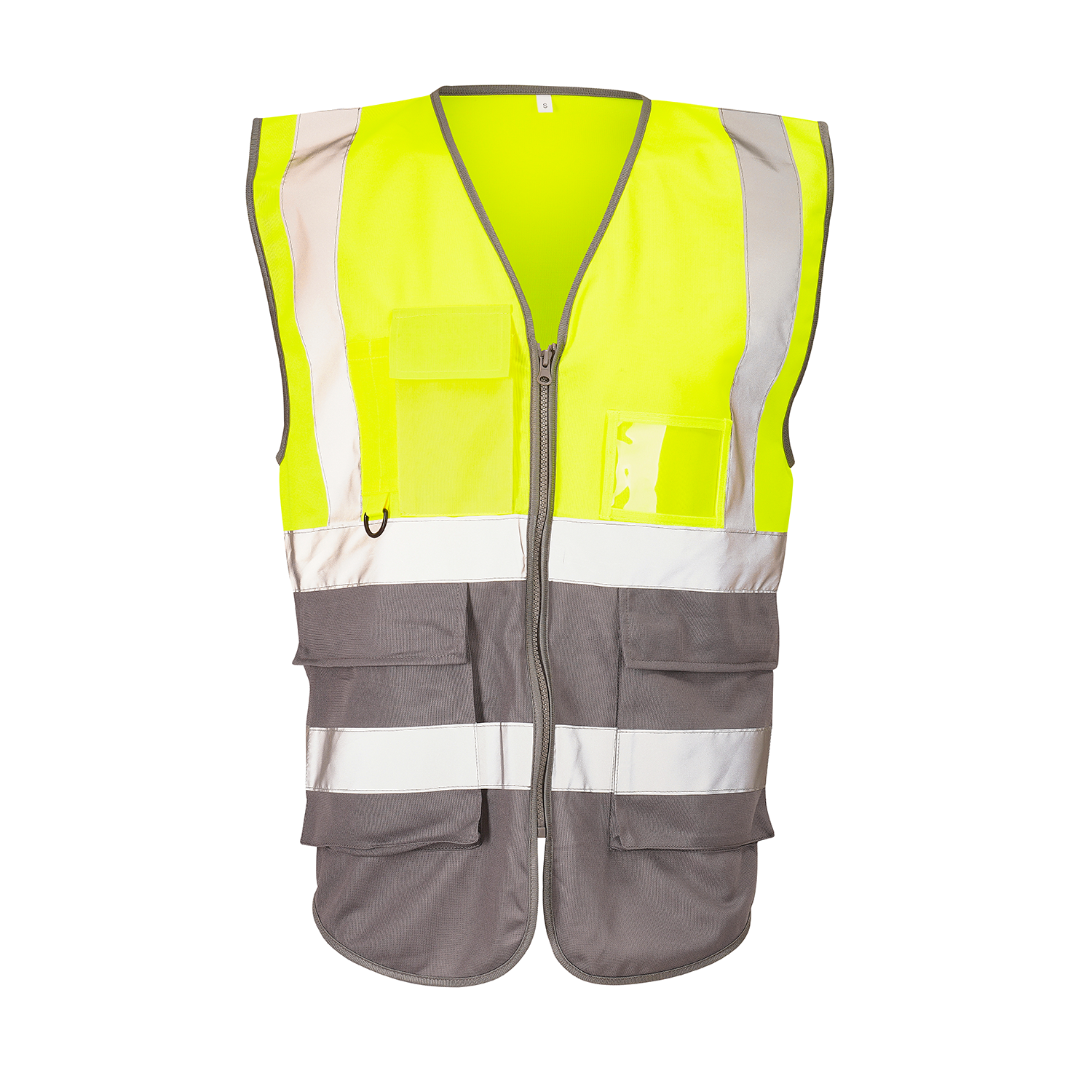
Hi Vis Yellow 2 Tone Executive Vest
Yellow paired with royal blue, grey, black or navy. Yellow reads as the standard site colour, so this suits production supervisors, line leaders and shift managers inside the plant. Sizes S to 4XL.
View yellow 2 tone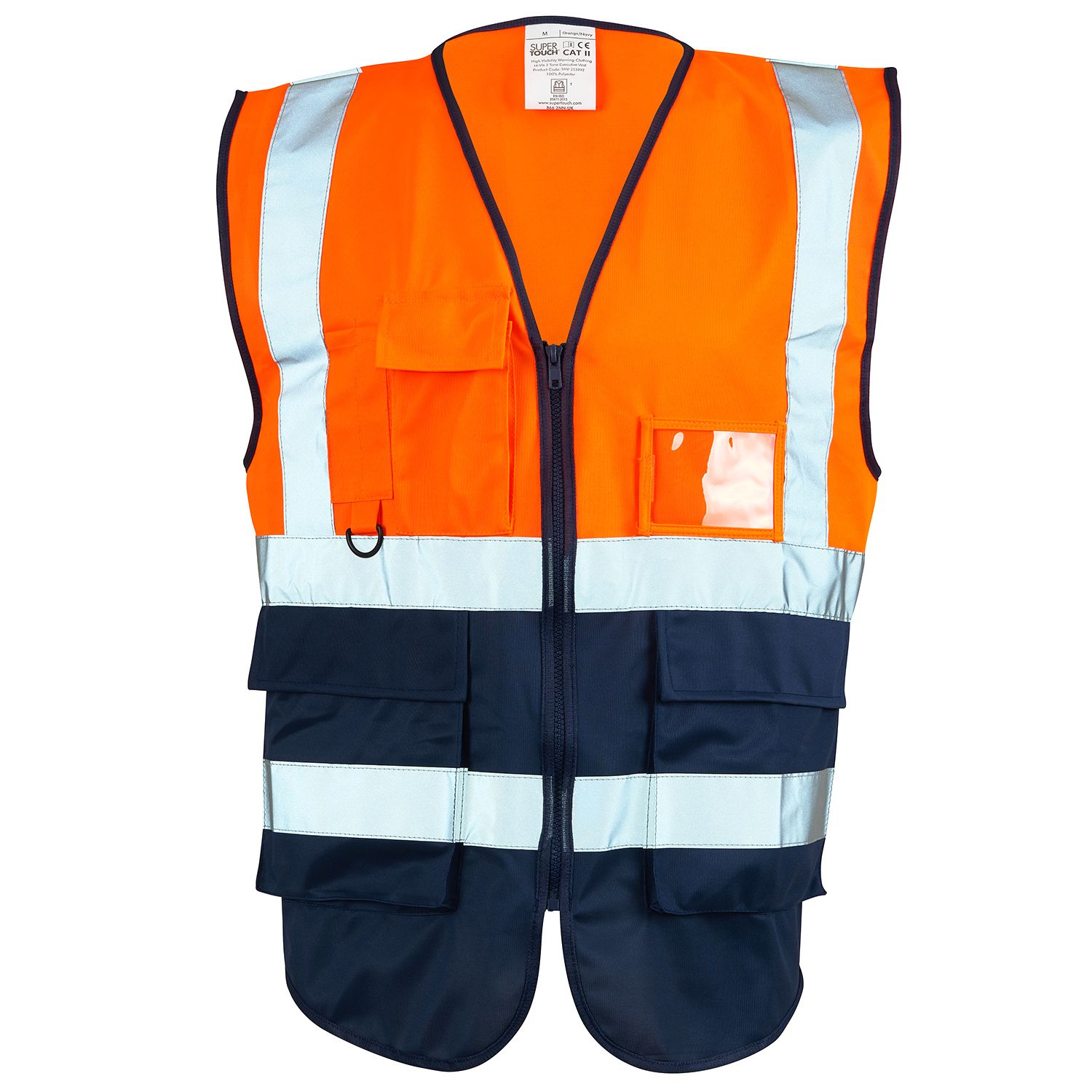
Hi Vis Orange 2 Tone Executive Vest
Orange with navy, royal blue, black, lime or grey, plus a red and grey option. The natural fit for yard, logistics, goods in and traffic facing supervisors. Sizes S to 4XL.
View orange 2 toneIf your warehouse operatives wear orange, put the warehouse supervisor in an orange two tone. If your production floor runs on yellow, the production supervisor wears a yellow two tone. The team’s colour and the manager’s colour stay in the same family, so the hierarchy reads cleanly.
Browse the full range in our Executive Vests category.
Make the colour code do double duty: add printing
Colour tells people a role from a distance, and printed or embroidered text confirms it up close. Adding “FIRST AID”, “FIRE WARDEN”, “SUPERVISOR”, “VISITOR” or your company logo to the back and chest turns a colour coded vest into a complete identification system, and reinforces the scheme for anyone still learning it.
Every vest above can be customised in house with text or your logo through printed hi vis vests, screen printing or embroidery, whether that’s a single supervisor’s vest or a bulk order for the whole plant. Because everything is decorated on site, you can keep the whole workforce consistent and reorder the same spec whenever you take on new staff.
Whether you need a range of single colours to map every role or a set of two tone executive vests for your management tier, we can supply, print and embroider the lot. Family run from Limerick since 1994.
The takeaway
A hi vis colour code is one of the easiest wins in factory safety, turning a wall of identical vests into a readable map of who does what.
- Start with certified yellow or orange as your visibility base.
- Assign single colours to clear roles like first aid, fire response and visitors.
- Use two tone executive vests to mark out supervisors and management without giving up on the safety standard.
- Document it, put a key on the wall, and add printing to lock it in.
Your whole team will then be able to read the floor at a glance.
Frequently asked questions
What do the different hi vis vest colours mean in a factory?
There is no single legal rule, so each site sets its own scheme, but common conventions are: yellow for general operatives, orange for warehouse and yard staff, red for fire wardens, green for first aiders, blue for maintenance and engineering, and unusual colours like purple or pink for visitors and new starters. The colours let staff identify each other’s roles from a distance. Our Yoko hi vis vest comes in 12+ colours, so you can map a colour to every role on site.
Is there a standard colour for first aiders or fire wardens?
Not a legal one, but by widespread convention green (or paramedic green) is used for first aiders and red is used for fire wardens and emergency response. What matters most is that your site documents its own scheme and trains staff on it, so the colours are read consistently across every shift. Adding “FIRST AID” or “FIRE WARDEN” to the back with printed hi vis vests makes the role clear up close too.
Do coloured hi vis vests meet the EN ISO 20471 safety standard?
Only fluorescent yellow and orange (and yellow and orange combinations) reach the higher visibility classes such as Class 2. Colours like blue, red, pink and paramedic green generally rate as Class 1 or are not certified as hi vis at all. Use them for indoor identification, but keep anyone working near forklifts or traffic in certified yellow or orange from our Hi Vis Vests range.
What is the difference between a standard hi vis vest and an executive vest?
A standard vest is a lightweight garment focused on visibility. An executive vest is built as proper workwear, with a full length zip, multiple pockets, a pen and phone pocket, and a side loading ID card holder. Executive vests also come in two tone colour designs, which keep the wearer certified while marking them out as a supervisor or manager. See the full Executive Vests range.
Why are executive vests two colours?
The two tone design does two jobs at once. A hi vis yellow or orange top half keeps the wearer visible and certified, while the contrasting lower panel in navy, black, grey or royal blue instantly signals a management or supervisory role. The Yoko executive hi vis vest comes in 20+ colour combinations.
Should factory supervisors wear yellow or orange executive vests?
A common approach is to mirror the colour their team wears. Production supervisors on a yellow floor suit the yellow 2 tone executive vest, while yard, logistics and goods in supervisors suit the orange 2 tone executive vest to match their teams. Keeping the manager’s colour in the same family as the team’s makes the hierarchy easy to read.
Can hi vis vests be printed with roles or a company logo?
Yes. Adding text such as “FIRST AID”, “FIRE WARDEN”, “SUPERVISOR” or “VISITOR”, or your company logo, turns a colour coded vest into a full identification system. Every vest in our range can be printed or embroidered in house, from a single vest to a full site order.